The Legendary STOL Aircraft
The Storch
From the battlefields of WWII to modern airfields around the world — the story of the most remarkable short takeoff and landing aircraft ever built.

Scroll to explore ↓
From the battlefields of WWII to modern airfields around the world — the story of the most remarkable short takeoff and landing aircraft ever built.
In 1935, the German Air Ministry issued a requirement for a STOL liaison and observation aircraft. Three firms competed. Reinhold Mewes at the Gerhard Fieseler Werke in Kassel, Germany designed an aircraft so capable that it rendered the competition irrelevant. The Fieseler Fi 156 first flew in 1936, entered Luftwaffe service in 1937, and quickly earned the nickname "Storch" — German for "Stork" — for its long, stalky landing gear and graceful slow flight.
The secret lay in its wing. Full-span automatic leading-edge slats combined with large slotted flaps allowed the Storch to fly at extraordinarily low speeds and steep angles of attack. In any modest headwind, the aircraft could appear to hover — or even fly backwards relative to the ground. It could land in a space shorter than a tennis court and take off from a farmer's field.

The German Air Ministry seeks a short takeoff and landing observation aircraft. Fieseler, Messerschmitt, and Siebel submit designs.
The Fi 156 V1 prototype takes to the air from Kassel. Its STOL performance is immediately extraordinary.
The Storch wins the competition decisively and enters operational service for reconnaissance and liaison duties.
Deployed on every front — North Africa, the Eastern Front, Western Europe. Used by every branch of the Wehrmacht for observation, casualty evacuation, and officer transport.
France continues production as the Morane-Saulnier MS.500 Criquet. Czechoslovakia also builds copies. Total production across all variants reaches approximately 3,500 aircraft.
Powered by the Argus As 10C — a 240hp air-cooled inverted V-8 — the Storch traded speed for something far more valuable: the ability to operate from anywhere.
The Storch wasn't a fighter or a bomber — it was something rarer. An aircraft that went everywhere, saw everything, and became the backdrop to some of the war's most extraordinary moments.

The most famous Storch mission of all. After Italian dictator Benito Mussolini was deposed and imprisoned at the Campo Imperatore hotel atop the Gran Sasso massif, SS commando Otto Skorzeny led a glider-borne assault to free him. Pilot Heinrich Gerlach then landed a Storch on a tiny rocky slope beside the hotel — a strip barely 30 meters long at 2,000 meters altitude. He squeezed both Skorzeny and Mussolini aboard and got airborne. The aircraft was dangerously overloaded, dropped off the edge of the slope to gain speed, and somehow made it to Rome. It remains one of the most audacious aviation feats of the war.
On the vast Russian front, the Storch became indispensable. It flew artillery observation missions, directed fire, evacuated wounded soldiers with a stretcher fitted behind the pilot, and shuttled officers between units spread across hundreds of kilometers of frontline. Its ability to operate from frozen fields, forest clearings, and dirt roads made it one of the most versatile aircraft in the theater. Generals relied on it; frontline troops cursed its appearance, knowing artillery would follow.
Field Marshal Erwin Rommel — the "Desert Fox" — used a Storch as his personal reconnaissance aircraft across the North African campaign. He would fly low over the desert to observe Allied positions firsthand, an unconventional habit for a commander of his rank. The Storch's slow speed and exceptional visibility from its greenhouse cockpit made it the perfect platform for a general who insisted on seeing the battlefield with his own eyes.
In one of the war's most bizarre air combats, a Storch crew reportedly shot down an American L-4 Grasshopper observation plane using a handheld weapon. A slow, unarmed liaison aircraft defeating another slow, unarmed liaison aircraft — with a pistol. It is often cited as one of the last aerial victories of the European war, and perfectly encapsulates the Storch's presence in every corner of the conflict.
Of the roughly 2,900 Fi 156 Storchs built during the war — plus an additional 600 postwar French MS.500 Criquets and Czech copies — only a handful survive today.
Surviving examples are found in museums and private collections across Germany, France, the United Kingdom, the United States, Australia, and New Zealand. Some have been meticulously restored to flying condition; others rest in museums as preserved artifacts. Each one is a piece of living history — a reminder of the aircraft that could land on a mountain, a highway, or a frozen field, and did so thousands of times across every theater of war.
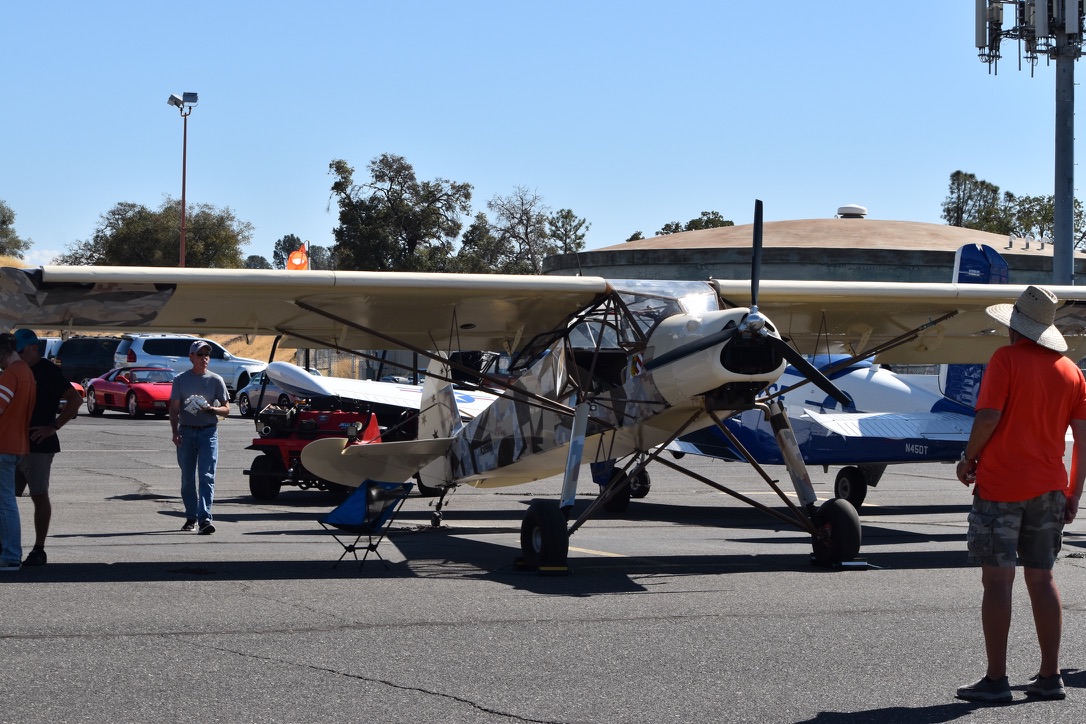
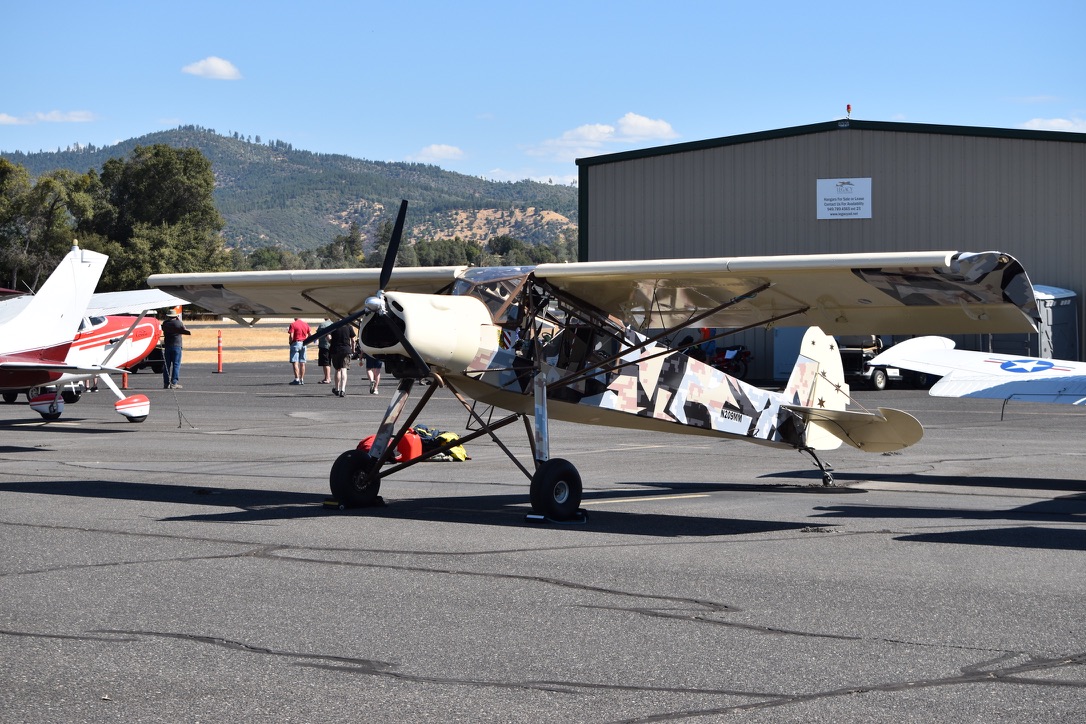
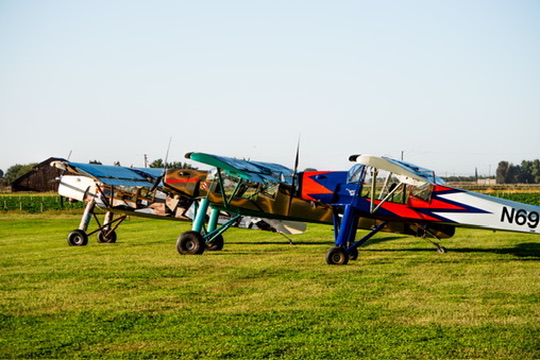
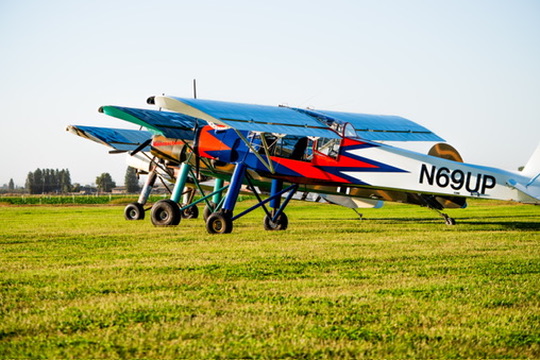
In the early 1990s, Serbian-born Australian engineer Nestor Slepcev set out to capture the magic of the original Storch in a lighter, modern airframe. Based in Scone, New South Wales, he designed a 75%-scale ultralight replica that retains the original's legendary STOL handling — the automatic leading-edge slats, the massive flaps, the long-travel landing gear — while meeting modern ultralight and light sport aircraft regulations.

The result is an aircraft that captures the soul of the original — the same slow, graceful flight; the same ability to drop into a tiny field and stop in a few dozen meters — but wrapped in a modern, maintainable, and affordable package that anyone can build and fly.
The Slepcev Storch is smaller and significantly lighter than the original, but preserves the wing design that made the Fi 156 special. Full-span leading-edge slats deploy automatically at low speed, while large slotted flaps enable a stall speed of approximately 45 km/h — rivaling the wartime aircraft despite having a fraction of the power.
Buyers choose between the Rotax 582 (65 hp), Rotax 912 (80–100 hp), or Jabiru 2200 (85 hp). The Rotax 912 is the most popular choice, offering a good balance of power, reliability, and fuel efficiency for an aircraft that weighs just 280 kg empty.
Offered primarily as a bolt-together kit requiring no welding, the Slepcev Storch is built from welded chromoly steel tube (fuselage), aluminum spars, and fabric covering. Over 200 kits have shipped to builders across the USA, Europe, South Africa, and Australasia. Factory-assist and fully assembled options are sometimes available.
Unlike the increasingly rare and expensive original, the Slepcev Storch puts the Storch experience within reach. Kit prices start around AUD $45,000–$70,000 depending on engine and options. Flying examples on the used market typically list between AUD $50,000–$90,000.
| Specification | Fi 156 Storch | Slepcev Storch |
|---|---|---|
| Scale | Full size | 75% |
| Wingspan | 14.25 m (46 ft 9 in) | 11.2 m (36 ft 9 in) |
| Empty Weight | 930 kg (2,050 lb) | 280 kg (617 lb) |
| Engine | Argus As 10C — 240 hp | Rotax 912 — 80–100 hp |
| Max Speed | 175 km/h (109 mph) | 160 km/h (100 mph) |
| Stall Speed | 50 km/h (31 mph) | 45 km/h (28 mph) |
| Seats | 3 (pilot + 2 or stretcher) | 2 (tandem) |
| Construction | Steel tube, fabric, light alloy | Chromoly tube, aluminum, fabric |
| First Flight | 1936 | ~1994 |
| Total Built | ~3,500 | 200+ kits |